
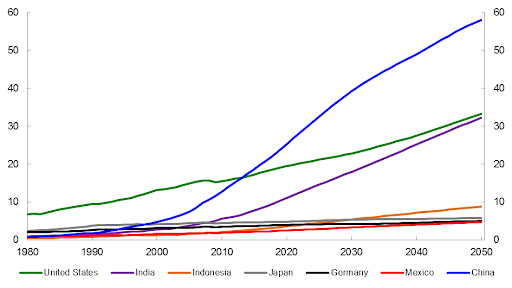
China’s economic journey stands as a testament to state-driven poverty alleviation, having reduced the population living on less than $3 a day from almost one billion in 1990 to zero in 2019. This massive shift serves as a potent global development benchmark and a challenge to free-market orthodoxies.
The United States, conversely, showcases a democratic failure of distribution. Its count of citizens living on less than $3 a day has tripled to over four million in the last 35 years. The US has the wealth and productivity but chooses to let inequality widen through political measures.
The alarm is sounded by income distribution figures, where the middle-income share has plummeted since 1980, and the poorest 10% now receive a fraction of the nation’s wealth—a smaller share than their counterparts in many poorer countries, including China.