
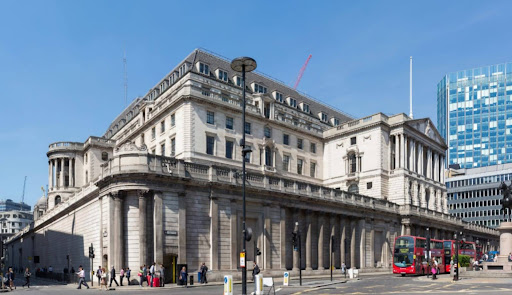
UK government bond yields rose sharply on Thursday after the Bank of England held rates at 3.75% and sent hawkish signals about the potential for rate hikes driven by the energy price impact of the Iran war. The rise in gilt yields reflected market expectations that the Bank would be forced to tighten monetary policy in response to rising inflation, with traders pricing in at least one quarter-point hike before year end and possibly a second. The monetary policy committee voted unanimously to hold, but the accompanying language was interpreted as a clear signal of readiness to act.
The driver of the changed outlook is the US-Israel conflict against Iran, which has pushed global oil and gas prices higher and threatened to push UK inflation above 3%. The Bank had previously expected inflation to approach its 2% target around April, but has revised those projections upward significantly. It now forecasts inflation rising to approximately 3.5% in March and remaining elevated throughout 2026.
Governor Andrew Bailey acknowledged the energy price risk and said the Bank stood ready to act if inflation threatened to become persistent. He warned that rising petrol prices were an early indicator of the shock and that household energy bills could follow if the disruption continues. His message was hawkish in substance even as he cautioned against assuming rate hikes were inevitable.
The rise in gilt yields has direct consequences for government borrowing costs, adding to the fiscal pressures facing Chancellor Reeves. Higher yields mean the government pays more to borrow on international markets, potentially constraining its ability to fund public services and investment. The combination of rising yields and potentially higher inflation creates a challenging fiscal environment.
For investors in UK government bonds, the rising yields reflect the repricing of rate expectations rather than any fundamental shift in credit quality. The near-term direction of yields will depend heavily on how the Middle East conflict evolves and whether the Bank follows through on the hawkish signals delivered on Thursday. Markets will be watching the next inflation data release and any developments in the region with close attention.