
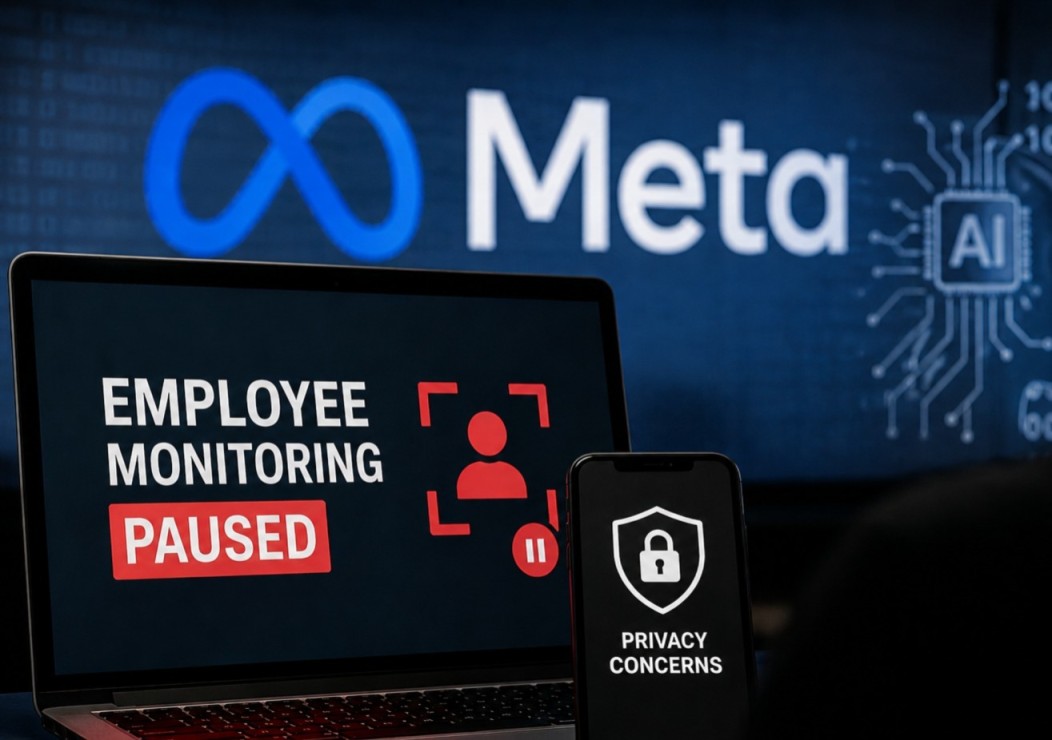
Meta has put the brakes on its internal program that tracked employee activities to train artificial intelligence models, following backlash over privacy concerns. This initiative, called the Model Capability Initiative, was designed to monitor employee actions such as keyboard use, mouse movements, and computer screen content. However, the program met with significant resistance from employees who raised alarms about the implications for privacy, consent, and trust.
In response to these concerns, more than 1,600 employees signed a petition urging Meta to halt the practice of collecting data on their computer usage. Despite Meta’s assurances that privacy protections were embedded in the program and that there was no misuse of the collected data, the company has decided to pause the initiative. This pause allows Meta to conduct a thorough review of the system and its data handling practices.
The suspension comes at a time when Meta is heavily investing in the advancement of artificial intelligence, utilizing substantial resources and computing power to enhance its AI models. The company maintains that leveraging data from skilled employees is a crucial component for refining AI capabilities. However, this situation underscores the ongoing debates about the ethical considerations involved in data collection for AI development, particularly the challenge of balancing technological progress with the need to safeguard employee privacy.
Meta’s decision to pause the Model Capability Initiative highlights the complexities and controversies surrounding data collection in the tech industry. As companies strive to improve AI technologies, they must also navigate the intricacies of maintaining trust and ensuring informed consent among their workforce. The outcome of Meta’s review could set important precedents for how similar data-driven programs are managed in the future.