
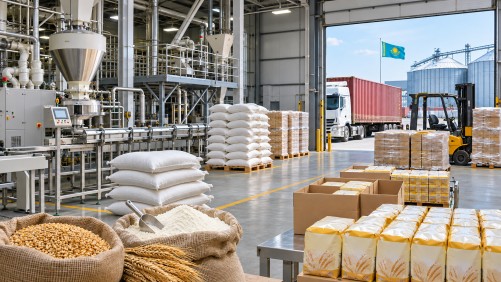
Kazakhstan’s processed agricultural exports have surged by 35%, reaching $3.4 billion, amid increasing global demand for value-added food products. The share of processed goods in the nation’s total agricultural exports has also risen, now accounting for 53.3%, up from 51.3%, according to figures released by the Agriculture Ministry.
Agriculture Minister Aidarbek Saparov has highlighted the government’s focus on enhancing the production and export of finished agricultural products. The strategy aims to maximize economic returns by processing raw materials domestically rather than exporting them in unprocessed form. Kazakhstan produces approximately 18–20 million tonnes of wheat and 1–1.2 million tonnes of corn annually, with this year’s corn harvest reaching 1.7 million tonnes, creating additional opportunities for the food-processing industry.
The country currently processes over 5 million tonnes of grain each year, with around 510,000 tonnes processed using advanced deep-processing technologies. Notably, in 2025, the production of starch products rose by 21.8%, totaling 145,100 tonnes, while bioethanol production more than doubled year-on-year, reaching 21,000 tonnes.
In a bid to further strengthen its agricultural processing industry, Kazakhstan plans to establish six major wheat and corn processing facilities by 2029. These projects are anticipated to process 5.8 million tonnes of raw agricultural materials annually, bolstering the nation’s capacity to export finished products and enhance the value derived from its agricultural resources.