
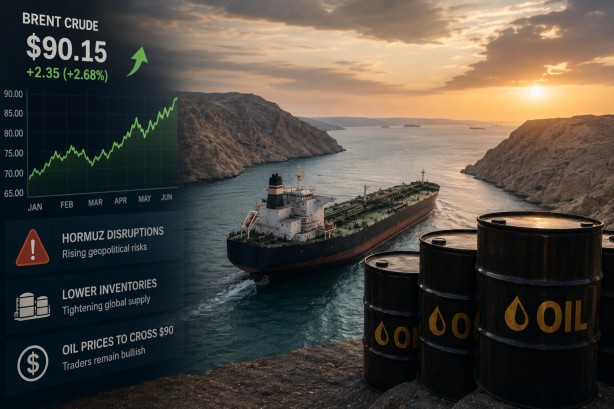
Oil prices have seen their most significant weekly rise since April, with Brent crude nearing $85 per barrel after a roughly 11% increase over the week. However, experts suggest that a sustained price above $90 would require a long-term disruption in the Strait of Hormuz or evident signs of tightening global oil supplies. The US benchmark, West Texas Intermediate, is also approaching $80 as tensions between the United States and Iran heighten, impacting Middle Eastern supply routes and slowing tanker traffic through the crucial strait.
The Strait of Hormuz is a focal point for energy markets, with around 20% of the world’s oil supply passing through this strategic waterway. The recent increase in oil prices reflects concerns over regional tensions, yet Brent crude has struggled to surpass this week’s peak of $87.55 per barrel. Analysts note that traders are still banking on diplomatic efforts to avert any long-term crisis that could further disrupt oil shipments.
The situation has already begun to influence fuel markets significantly. In the United States, refining margins are on the rise as supplies of diesel and gasoline tighten, a trend mirrored in European fuel markets facing similar pressures. Additional complications arise from ongoing disruptions to Russian oil exports, fueling more anxiety over global supply stability.
Despite the price surge, analysts remain cautious, indicating that without a notable decline in inventories or an escalation in US-Iran tensions resulting in prolonged shipping disruptions through the Strait of Hormuz, oil prices are unlikely to maintain a level above $90. The focus for traders remains on diplomatic developments and supply data, which are expected to dictate the next major movements in the global oil markets.