
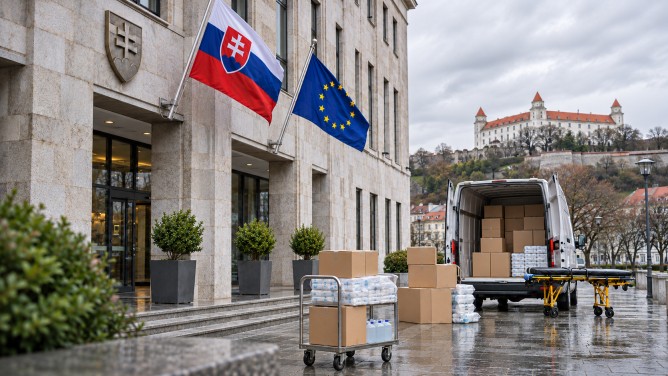
Slovakia has decided not to participate in the European Union’s proposed €45 billion loan program intended to support Ukraine, Prime Minister Robert Fico announced. While reaffirming Slovakia’s stance against financial contributions linked to the conflict, Fico emphasized that the country would continue to offer humanitarian assistance to Ukraine.
This decision reflects Slovakia’s consistent approach, as the nation had previously opted out of an earlier €90 billion EU loan package for Ukraine. Fico rejected calls from German Chancellor Friedrich Merz for increased financial commitments from EU member states, arguing that military-related financial support could prolong the conflict.
The topic is expected to be a focal point in discussions among the leaders of Slovakia, Poland, Hungary, and the Czech Republic, along with Austria’s chancellor, during a meeting scheduled in Bratislava on November 23. These discussions will precede the EU summit set for November 26-27 in Brussels, where European leaders will deliberate on the bloc’s proposed €1.78 trillion budget for 2028-2034, which includes provisions for continued support to Ukraine through a dedicated funding reserve.
Slovakia’s decision highlights the growing differences among European governments regarding how to finance Ukraine’s future needs and distribute the financial burden among EU member states. The issue underscores the challenges faced by the EU in maintaining a unified stance on support for Ukraine amid varying national priorities and economic considerations.