
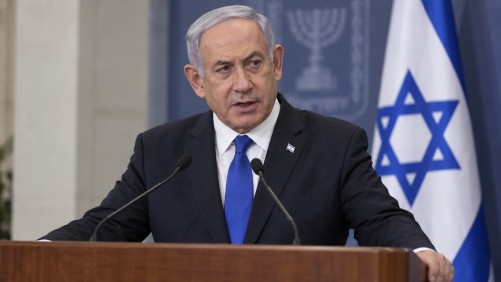
Israeli Prime Minister Benjamin Netanyahu has condemned a deadly missile attack by Houthi rebels targeting King Khalid International Airport in Riyadh, Saudi Arabia. The strike reportedly resulted in at least 12 fatalities and injured over 300 individuals, further escalating tensions in the ongoing Yemen conflict.
In a statement, Netanyahu labeled the attack as a “horrific terrorist attack” and extended his condolences to the families of the victims. He urged for a unified stance against terrorism and highlighted the importance of safeguarding civilians and ensuring regional peace.
The airport, a critical hub in Saudi Arabia, experienced another attack on Sunday, prompting Saudi aviation authorities to confirm additional injuries and initiate damage assessments and safety inspections. Consequently, the facility remained closed following the initial assault.
The attacks have disrupted daily life in Riyadh, leading Saudi authorities to halt in-person classes and transition to remote learning. Despite these challenges, a significant international energy conference in the capital is still set to proceed as planned.
The Saudi-led coalition, which backs Yemen’s internationally recognized government against the Iran-supported Houthi movement, continues to grapple with escalating conflict. The Houthis have previously claimed responsibility for attacks on Saudi airports and energy infrastructure, cautioning airlines and passengers against using much of Saudi airspace.
In a parallel development, the Houthis accused Saudi Arabia of launching airstrikes in Yemen’s capital, Sanaa, resulting in the death of a child and injuries to several others. Saudi authorities had yet to respond to these allegations at the time of reporting.
The intensifying conflict raises significant concerns about the security of civilian infrastructure and the potential for disruptions in shipping through the Bab el-Mandeb Strait, a critical maritime route linking the Red Sea and the Gulf of Aden. Any further escalation poses a threat to regional energy supplies and international maritime trade. Amid these rising tensions, U.S. President Donald Trump announced plans to discuss the situation with Saudi Crown Prince Mohammed bin Salman, reflecting growing international apprehension over potential broader regional involvement.